
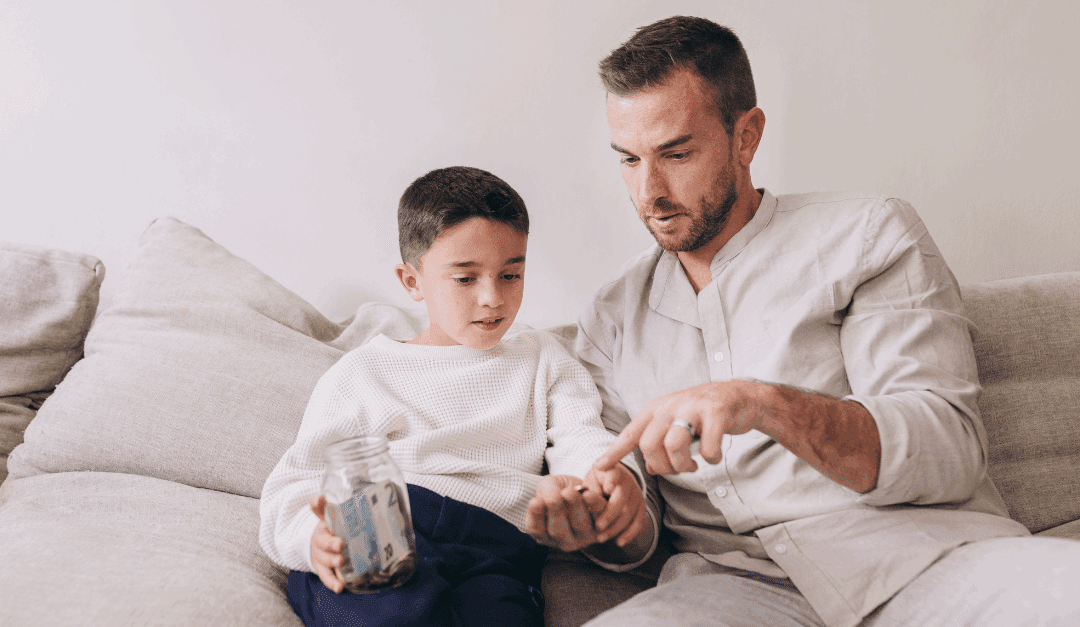
When we think about teaching our children money skills, we often focus on what they don’t yet know. But what if the best place to start is by understanding what they already think about money?
Children form money beliefs far earlier than most of us realise. By the age of 7, many of their core financial habits and attitudes are already taking shape. They watch us in the supermarket, they hear conversations about bills, they notice the excitement of payday or the stress of unexpected costs. Without us even realising, they’re building their own picture of what money means.
Start With Five Simple Questions
One of the easiest ways to uncover your child’s current money beliefs is simply to ask. Try these five questions and see what they say:
1. What is money?
2. Why do we have money?
3. What do Mum & Dad spend money on?
4. What would you spend £20 on today?
5. What’s one thing you’d like to save for?
Their answers may surprise you. Some children will see money as something to spend straight away, others might instinctively want to save, and a few will already show a sense of generosity.
These responses give you a snapshot of what your child knows, how they see the world around them, and what they value most.
What Do They Know and Believe?
By listening closely, you’ll get a clearer picture of your child’s beliefs about money:
- Do they think money is endless because you can “just tap the card”?
- Do they already see the link between work and earning?
- Are they aware of bills, food shops, or family priorities?
- Do they value fun, generosity, independence, or security most?
Every answer is a clue. And those clues help you as a parent know where to start the conversation.
Why This Matters for Parents
Instead of jumping straight into “lessons,” you can meet your child where they are. If they believe money is only for spending, you can gently introduce the idea of saving. If they already save but never spend, you can talk about balance and enjoying money too.
Money education doesn’t have to be heavy or complicated. It’s about building on what’s already there – step by step, conversation by conversation.
Try This Activity
- Ask and record: Write down your child’s answers to the five questions.
- Reflect together: Talk about their choices and share your own experiences.
- Revisit later: Ask the same questions in six months and see how their ideas have changed.
A Strong Place to Begin
These simple conversations can unlock so much about how your child views money. And they give you the perfect starting point to build good habits, confidence, and money skills for life.
At Pounds & Piggy Banks, our Teach Kids Money programme is built on this exact principle – children aren’t blank slates. They already have beliefs about money, and you can use those as a springboard to guide them towards healthy habits and lifelong confidence.
Check out our Teach Kids Money Programme over in our handy app here.